
Where Do Songs Begin for Me?
Most people assume songs start with a melody.
For me, they almost never do.
They start as stories.
Before there’s a hook, before there’s a chorus, there’s usually a beginning, a middle, and an ending already taking shape. Sometimes it starts with a title. Sometimes just a feeling I can’t quite shake.
But the song doesn’t exist yet.
Not until the story does.
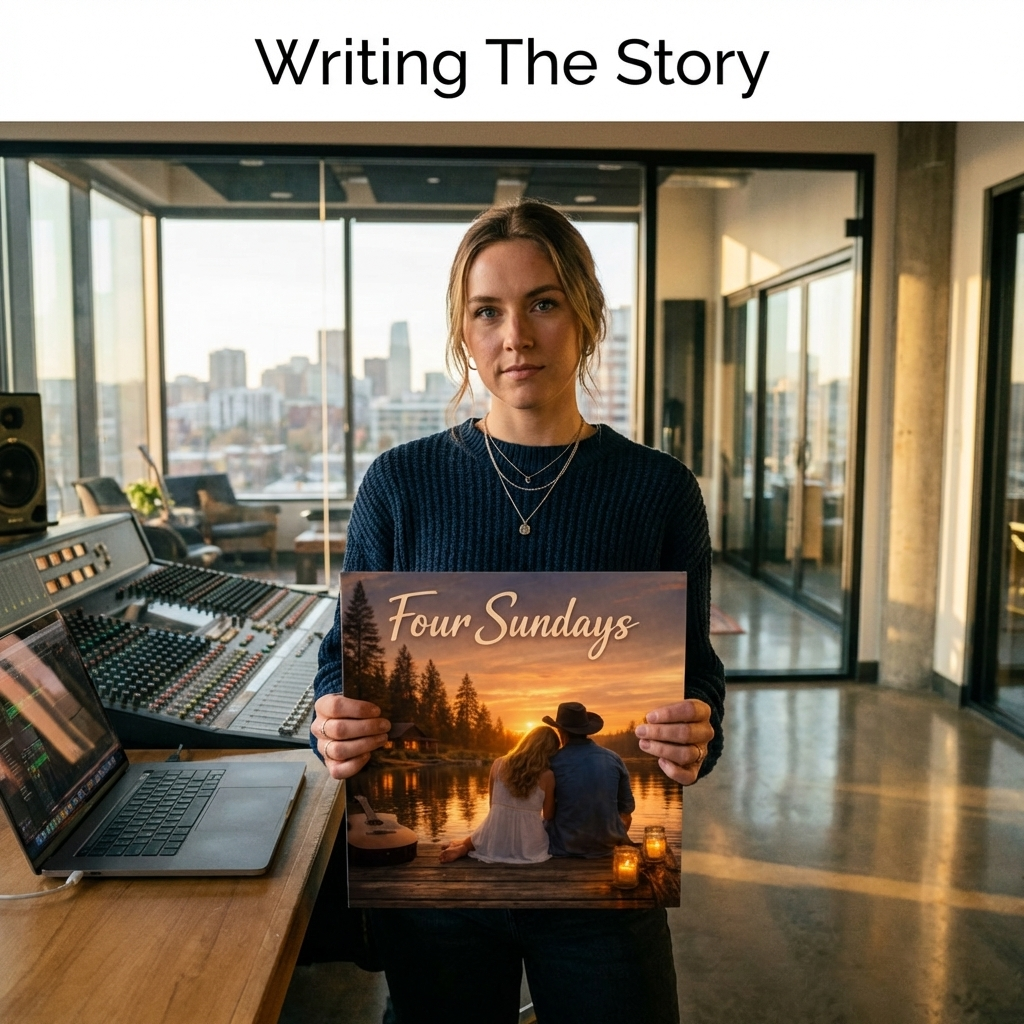
One song that reflects this process clearly is Four Sundays.
The Story Behind Four Sundays
The idea started with a very specific moment in time.
That stretch of summer right after high school, when everything feels open, but nothing is settled yet. Time slows down. Emotions feel bigger. The future still feels optional.
In Four Sundays, I imagined a young woman in that moment, meeting someone she didn’t expect.
He’s an exchange student staying next door.
Temporary by nature… even if neither of them wants to say it out loud.
That tension shows up immediately in the opening lines:
“That summer changed the day you came
Next door with a foreign name”
“Next door” creates closeness.
“Foreign name” quietly introduces distance.
Those two ideas side by side tell the listener everything they need to know.
As the story unfolds, the relationship moves quickly, the way summer relationships tend to.
No hesitation. No overthinking. Just time spent together.
“You crossed the fence like you belonged
Talked all night with the radio on”
Crossing the fence becomes more than physical, it’s emotional access.
And the radio playing all night isn’t about conversation.
It’s about presence.
By the middle of the song, she’s already deeper than she realizes:
“More of a man than boys I know”
That single line explains the ending.
She isn’t losing a summer fling.
She’s losing the version of love she thought would last.
How the Story Becomes a Song
Once the story is clear, the challenge changes.
Now it’s about compression.
How do you take something that feels like a full experience… and make someone feel it in three minutes?
That’s where structure comes in.
- Verses carry the moments
- Chorus carries the memory
The chorus doesn’t explain what happened.
It explains what it felt like:
“Four Sundays in the summer sun
Felt like forever, felt like one”
Memory doesn’t measure time accurately.
It compresses it.
That idea became the center of the song:
“A whole lifetime in four Sundays“
Everything else points back to that.
The Moment of Clarity
Every story has a point where the truth can’t be avoided.
For this song, it came late:
“But loving you meant letting go
If you wanted me, I’d know”
That line wasn’t there at the beginning.
It only showed up once I understood what the story was really about.
This isn’t a song about heartbreak.
It’s about acceptance.
About realizing that love doesn’t always end in conflict.
Sometimes…
it just doesn’t choose you.
Why Details Matter
Country music lives in the details.
A fence.
A radio.
Four Sundays instead of a calendar date.
These aren’t decorations.
They’re the story.
Great songs don’t tell people what to feel.
They show them something real, and let the listener meet it halfway.
That’s where my songs begin.
Not with a melody.
Not with a rhyme.
But with a story that feels real enough…
that it deserves to be told.
Listen to the Song
To hear a 30-second sample of Four Sundays, click here:
Explore more songs and stories at NashvilleLyrics.com
Where real stories turn into country songs.